

We live in a world full of choices, thanks to the internet. It’s easier than ever to find services and products. But, comparing rates can be tough. Luckily, there are tools to help us find the best deals.
Imagine comparing prices from Google Shopping, Shopzilla, or Camelcamelcamel. This is now easy with a rate comparison tool. It saves us time and money, helping us make better choices. For example, we can find the cheapest car insurance rates from CIG, Grange Insurance Association, or USAA.
In today’s market, comparing rates is key. With so many choices, picking the right one is hard. But, by using the right tools, we can find what we need. A compare rates tool helps us understand the market and make smart choices.
Key Takeaways
- We must compare rates to find the best service or product for our needs.
- A rate comparison tool can help us navigate through numerous options and find the best rates.
- Comparing rates from multiple providers can help us save time and money.
- We can use a best rates comparison tool to compare car insurance rates from different providers.
- Understanding the factors that affect rates is critical for making informed decisions.
- A compare rates tool can help us analyze the market and make more informed decisions.
- Using a rate comparison tool can help us find the cheapest annual rates for our needs.
Understanding the Importance of Comparing Rates
Comparing rates is key to making smart financial choices. It’s important to look at interest rates and mortgage rates. Knowing what affects these rates helps you pick options that work for your budget.
The Federal Reserve’s interest rate range is between 4.25% and 4.5%. Inflation is about 3%. These numbers can change how much you pay for loans.
A study by Consumer Reports shows comparing rates can save up to 20% on big purchases. This is very important for big investments like mortgages. By comparing mortgage rates, you can find the best deal and avoid paying too much.
For example, the average 30-year fixed mortgage rate in late January 2025 was 6.96%. The best savings interest rates were up to 4.75% APY.
When comparing rates, consider these factors:
- Interest rates: These change with the economy and the Federal Reserve’s actions.
- Mortgage rates: They vary by loan type, credit score, and market conditions.
- Annual Percentage Rate (APR): This includes all borrowing costs, like fees and interest.
By comparing interest and mortgage rates, you make choices that help your finances. Whether you’re buying your first home or investing, knowing how to compare rates is vital.
Types of Rates You Can Compare
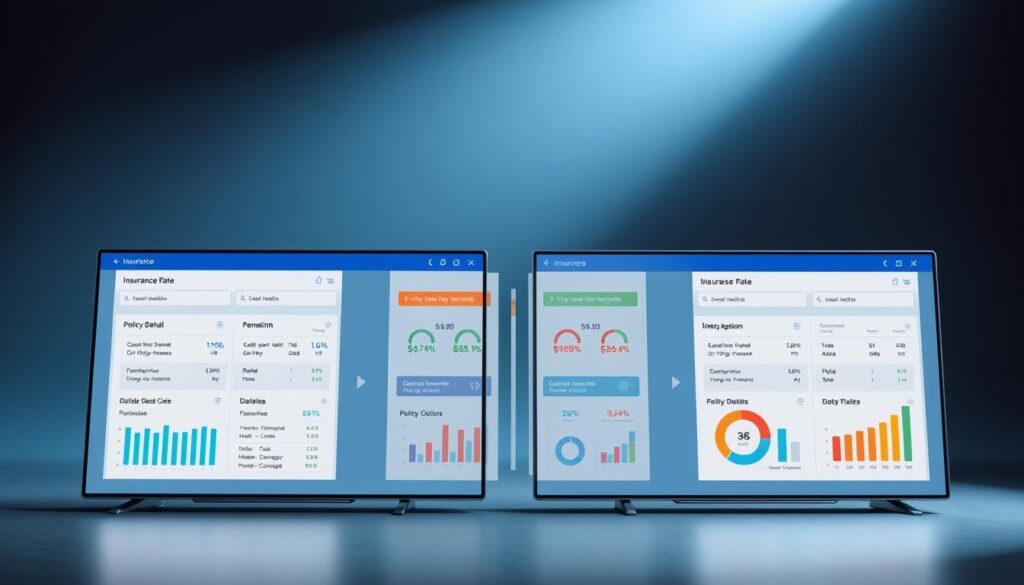
There are many types of rates to compare. We can use a rate comparison website to look at insurance rates from different providers. This helps us make a smart choice and pick the best option for us.
Fixed vs. Variable Rates
Fixed rates stay the same for a set time. Variable rates can change over time. When comparing insurance rates, we need to think about these differences and how they might affect our budget.
Service Fees and Hidden Costs
We should also look at service fees and hidden costs. These can increase our expenses quickly. By using a rate comparison website, we can find the best insurance rate that fits our needs and budget.
Seasonal and Promotional Rates
Some providers have seasonal and promotional rates. These can help us save money. We should watch for these deals and use a rate comparison website to find the best rate.
Where to Compare Rates
It’s important to know where to find the best rates. We can use online tools, local services, and industry websites to compare loan rates. For example, Consumer Reports offers unbiased reviews and ratings to help us choose wisely.
Online marketplaces let us compare rates from many lenders at once. We can also talk to local banks and credit unions about their rates. Websites focused on mortgages or personal loans also have lots of information on rates and terms.
- Research online comparison tools and industry-specific websites
- Visit local service providers to inquire about their rates and terms
- Use a best rates comparison tool to find the most suitable option
By comparing rates and terms, we can make smart choices. Whether we need a mortgage, personal loan, or something else, comparing rates is key.
| Loan Type | APR | Monthly Payment |
|---|---|---|
| 30-year fixed-rate mortgage | 6.632% | $2,399 |
| 20-year fixed-rate mortgage | 6.592% | $2,496 |
| 15-year fixed-rate mortgage | 5.985% | $2,562 |
Tips for Effective Rate Comparison
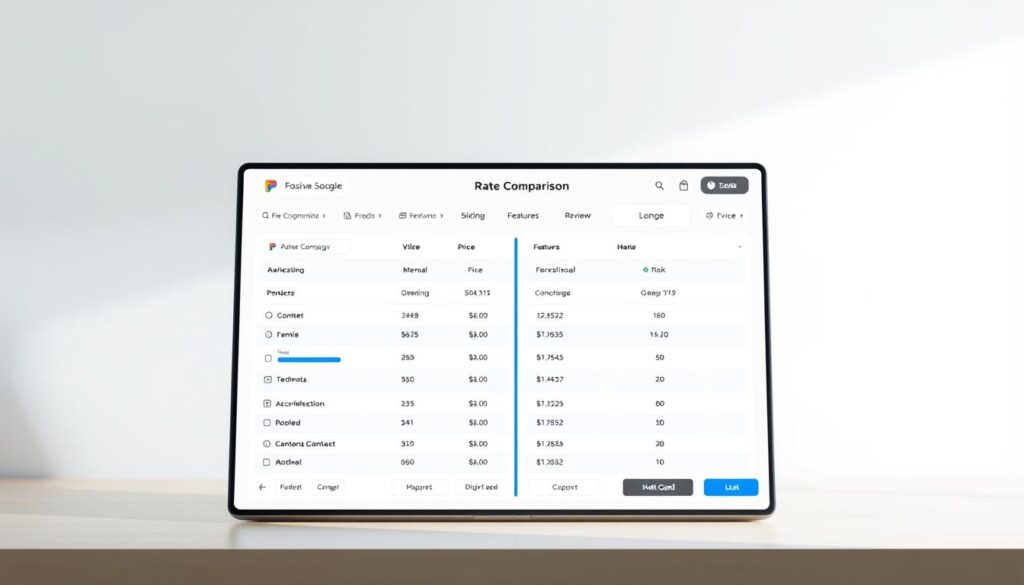
When comparing rates, knowing what you need is key. A rate comparison tool can show you different options. Start by figuring out what you really need. Look at more than just the numbers.
Consider things like customer service and the provider’s reputation. Also, think about any extra features they might offer.
A rate comparison tool is great for seeing different rates. But, don’t forget to check what others say about the providers. Reading customer reviews can tell you a lot about a provider’s reliability and service quality.
By doing your research and comparing rates, you can find the best deal for you. It’s all about making an informed choice.
- Define your needs and requirements clearly
- Look beyond the numbers and consider additional factors
- Check customer reviews and ratings
- Use a rate comparison tool to compare rates from different providers
Follow these tips to compare rates well. Always keep your needs in mind. And don’t hesitate to ask for more information if you need it.
| Provider | Rate | Features |
|---|---|---|
| Provider A | 5% | Customer service, reputation |
| Provider B | 6% | Additional features, reliability |
How to Analyze Rate Differences
When comparing rates, it’s key to look at the interest rate, loan term, and fees. This is true for both mortgage and insurance rates. Each factor plays a big role in the overall cost.
A study by the National Association of Realtors shows big savings. Homebuyers can save up to 10% by comparing mortgage rates. This shows how important it is to understand the terms and conditions.
What to Look For in Rates
When comparing rates, focus on the interest rate, loan term, and fees. For example, a 30-year mortgage with a 4% interest rate might have lower monthly payments. This is compared to a 15-year mortgage with a 3.5% interest rate.
Understanding Terms and Conditions
It’s vital to understand the loan or insurance policy’s terms and conditions. Look at the loan-to-value ratio, credit score needs, and any prepayment penalties. For instance, a high loan-to-value ratio might mean you need mortgage insurance, raising your monthly payment.
Evaluating Long-Term Costs
When evaluating costs, think about the total cost over time. Consider interest payments, fees, and any penalties for early payment. By looking at these differences and understanding the terms, you can make a smart choice for your needs.
| Loan Type | Interest Rate | Loan Term | Fees |
|---|---|---|---|
| 30-year fixed-rate mortgage | 4% | 30 years | $1,000 |
| 15-year fixed-rate mortgage | 3.5% | 15 years | $500 |
The Role of Discounts and Offers
Discounts and offers are big factors in buying things. About 75% of people look at these when deciding to buy. A rate comparison website can help you find the best deals.
There are many kinds of discounts, like loyalty programs and memberships. Some discounts are for students, faculty, and staff. Others are for specific groups. To get the best rates, it’s smart to buy at the right time. A rate comparison website can show you the best deals.
Some popular discounts and offers include:
- 15% discount for students, faculty, and staff on beauty treatments
- Up to 10% cashback on every purchase using a digital currency
- Free admission for all students with a valid student ID
- Tickets for a discounted price for the entire season and special events with a discount code
By using these discounts and offers, you can save money. Always compare interest rates and use a rate comparison website to find the best deals.
| Discount Type | Description |
|---|---|
| Loyalty Programs | Exclusive discounts for loyal customers |
| Memberships | Special offers for members |
| Student Discounts | Discounts for students, faculty, and staff |
Common Mistakes When Comparing Rates
Comparing rates can lead to mistakes that cost money. We’ve found common errors to help you avoid them. One big mistake is ignoring extra fees. This can make you pay too much for something.
A study by the Consumer Financial Protection Bureau shows this. It found ignoring fees can make you overpay.
Another mistake is only looking at the price. This can cause you to miss important details. It’s key to look at the lender’s reputation and the loan terms too. This way, you can find the best deal for you.
- Not researching the provider
- Ignoring additional fees
- Focusing solely on price
Knowing these pitfalls helps you make a better choice. Whether it’s loan rates or other services, be careful and think it through. This way, you’ll find the best deal for you.
When to Seek Professional Help

Dealing with complex financial products can be tough. That’s why knowing when to ask for help is key. A financial advisor can help you compare rates and make smart choices. They use tools like rate comparison tools to help you find the best option.
There are times when you really need a pro’s help. For example, with tricky financial products, an expert can offer valuable advice. Here are some times when you should get professional help:
- Dealing with complex financial products
- Need help with compare rates and evaluating different options
- Require expert advice on financial planning and management
A rate comparison tool is a great tool for making choices. It lets you compare rates easily and pick the best one. Remember, asking for help is a sign of strength, not weakness. Don’t be afraid to ask for help when you need it.
| Situation | Recommended Action |
|---|---|
| Complex financial products | Seek professional help |
| Need help with compare rates | Use a rate comparison tool |
| Require expert advice | Consult a financial advisor |
Conclusion: Making the Best Choice
Comparing rates is key to finding the best service or product. By following the tips in this article, you can make a smart choice and save money. We urge you to start comparing rates today to get the best deal for you.
Looking for the best rates for insurance, utilities, or other services? This article has the tools and tips you need. Remember, the best choice often requires careful research and understanding the options.
First, know what you need. Then, check out different rate comparison websites. And always read the terms and conditions carefully. This way, you’ll make a choice that fits your budget and preferences. Don’t settle for less – compare rates and get the best value for your money.