

Finding the right health insurance can seem tough, but it’s key for our health and money. There are many plans out there, so picking one that fits our needs is important. In the U.S., all 50 states offer health insurance, like Alabama, Arizona, Florida, and Texas.
When looking at health insurance, think about costs, deductibles, and what benefits you get. Sites like Healthcare Bluebook can help find good care and prices near you. By comparing plans, we can get the right coverage for ourselves and our families, making health care affordable.
Exploring health insurance, we find many types like HMOs, PPOs, and EPOs. Each has its own benefits and features. Knowing these and checking policy details helps us choose wisely. Whether it’s individual plans or ones from work, the goal is to find one that covers us well and protects our money, giving us quality health care when we need it.
Key Takeaways
- Health Insurance is essential for financial security and access to quality Medical coverage.
- There are various types of Health Insurance plans, including HMOs, PPOs, and EPOs, each with its unique characteristics and benefits.
- Comparing Health Insurance plans and carefully reviewing policy exclusions and waiting periods is critical for making informed decisions.
- Resources like Healthcare Bluebook can help us find the best care and prices for medical services in our local areas.
- Having the right Affordable healthcare plan can provide peace of mind and protect us from unexpected medical expenses.
- It’s vital to evaluate and compare different Health Insurance plans to ensure we have the right Medical coverage for our individual needs.
Understanding Health Insurance Basics
Exploring healthcare options means knowing the basics of health insurance. It’s important to understand how insurance plans work and what they cover. We’ll cover common terms like premiums, deductibles, copayments, and coinsurance.
There are many health insurance plans out there, like HMO, PPO, EPO, and POS. Each has its own features. Knowing these differences helps you make a smart choice. Think about your health benefits and healthcare options to pick the right plan.
When picking a health insurance plan, consider coverage, provider network, and costs. Think about your health benefits and healthcare options carefully. This way, you can choose a plan that fits your needs.
Why You Need Health Insurance
Having health insurance is key for our financial safety and access to good care. It’s tough to understand health insurance, but it’s vital for our health. With medical costs going up, insurance helps us avoid big bills, so we can heal without worrying about money.
In the U.S., health savings are a big worry for many. Without insurance, one big medical bill can wipe out savings. Insurance companies offer plans like group health insurance to lessen these risks. By getting health insurance, we shield ourselves and our families from medical costs.
Some main benefits of health insurance are:
- It protects us from surprise medical bills
- It lets us get preventive care and check-ups
- It helps us manage long-term health issues and get the treatments we need
Recent data shows about 89% of the U.S. population had health insurance in 2019. This is good news, but many people are not covered well enough. We need to keep focusing on getting everyone the health insurance they need.
Understanding health insurance’s value helps us make smart choices for our health and money. Whether it’s group health insurance or personal plans, we should act to protect ourselves and our families.
| Year | Number of Uninsured Individuals |
|---|---|
| 2010 | 48.2 million |
| 2015 | 28.2 million |
| 2019 | 30 million |
Different Types of Health Insurance Plans
Understanding the various Health Insurance plans is key to making a good choice. We offer many Medical coverage options to fit different needs and budgets. This ensures Affordable healthcare for everyone.
There are several health insurance plans, each with its own features, benefits, and costs. These include Employer-Sponsored Insurance, Individual Health Plans, and Government Programs like Medicare and Medicaid.
Employer-Sponsored Insurance
This plan is offered by employers to their employees as a benefit. It often provides full Medical coverage, including access to a network of healthcare providers. It’s an Affordable healthcare option for many.
Individual Health Plans
These plans are for individuals and families without Employer-Sponsored Insurance. They can be bought directly from Health Insurance companies. They offer a variety of Medical coverage options to fit different needs and budgets.
Government Programs: Medicare and Medicaid
Medicare and Medicaid are Government Programs that offer Health Insurance to eligible individuals. This includes seniors, people with disabilities, and low-income families. These programs provide Affordable healthcare options and are vital to the healthcare system.
By understanding the different Health Insurance plans, we can make informed decisions about our Medical coverage. This ensures we have access to Affordable healthcare when we need it.
Key Features to Look For in a Plan

When picking a health insurance plan, it’s key to look at important features. These features impact the quality and cost of care. We seek plans with health benefits that cover doctor visits, hospital stays, and prescriptions. A good insurance plan should also have a wide network of providers. This makes it easier to find a doctor or hospital in the plan.
When checking out healthcare options, consider premiums, deductibles, and coverage. Here are some key things to look for:
- Premiums: The monthly cost of the plan
- Deductibles: The amount you must pay out-of-pocket before the plan starts covering costs
- Coverage options: The types of services and treatments covered by the plan
By carefully looking at these features, you can find a plan that fits your needs and budget. This gives you peace of mind and protects you from unexpected medical costs.
| Feature | Importance |
|---|---|
| Premiums | High |
| Deductibles | Medium |
| Coverage options | High |
Evaluating Your Personal Health Needs
Choosing the right health insurance plan is key. You need to think about your medical history and what health care you might need in the future. This way, you can pick a plan that fits your needs and could save you money. Insurance companies have many plans, like group health insurance, which is great for people with ongoing health issues.
To figure out what health insurance you need, consider these points:
- Medical history: Look at your medical records to see if you have any ongoing health problems.
- Future healthcare needs: Think about any medical procedures or treatments you might need soon. Make sure your plan covers them.
- Lifestyle factors: Think about your lifestyle, like your diet, exercise, and job. This can help you decide how much coverage you need.
By carefully looking at your health needs, you can choose the best health insurance plan. This ensures you get the coverage you need at a good price. Many companies offer group health insurance, which can be cheaper for families and individuals. Also, think about health savings options like health savings accounts (HSAs) to save money on health care costs.
| Insurance Type | Coverage | Cost |
|---|---|---|
| Group Health Insurance | Comprehensive coverage for groups | Varies depending on the plan |
| Individual Health Insurance | Customizable coverage for individuals | Generally more expensive than group plans |
How to Compare Health Insurance Plans
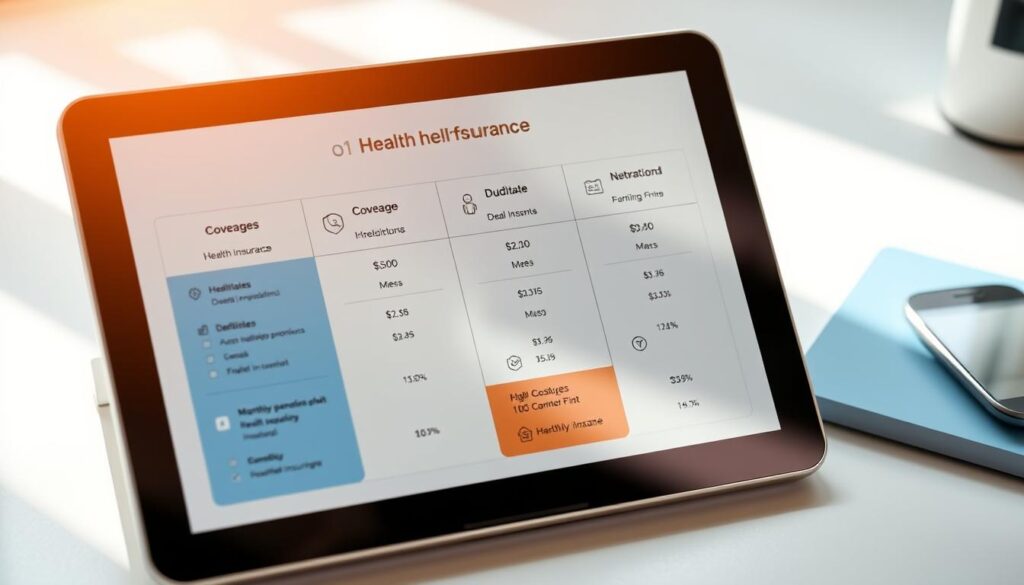
Choosing the right Health Insurance plan is key. With many options, picking the best Medical coverage can be tough. Online tools and insurance brokers can help simplify this.
Online tools let us compare plans by premiums, deductibles, and coverage. We can also look at the network of providers and the plan’s reputation for Affordable healthcare. This way, we can find a plan that fits our needs and budget.
Some important things to think about when comparing plans include:
- Premiums and deductibles
- Coverage options, like hospital and prescription drug coverage
- The network of providers, including doctors and specialists
- The plan’s reputation and what others say about it
By looking at these factors and what we need, we can pick a plan that offers great Medical coverage and Affordable healthcare.
Comparing Health Insurance plans means thinking about what we need and can afford. Online tools and insurance brokers can help us make a smart choice. This way, we get the best Medical coverage and Affordable healthcare.
| Plan | Premium | Deductible | Coverage |
|---|---|---|---|
| Plan A | $500 | $1000 | Hospitalization, prescription drugs |
| Plan B | $300 | $500 | Hospitalization, primary care |
The Application Process: Step by Step
Applying for health insurance can seem daunting. But, knowing the steps makes it easier. We’ll walk you through the application process. You’ll learn what information you need and what happens after you submit your application.
To apply for health insurance, you’ll need to share personal and medical details. This info helps determine if you qualify for health benefits and insurance plans. You’ll need to provide your medical history, income details, and social security number.
After collecting all the required information, you can submit your application. It’s important to double-check that everything is correct and complete. This way, you avoid any delays or rejections. Most applications are approved if everything is in order, with a 90% approval rate. The waiting time is usually 30 to 60 days. But, it might take longer if there are errors or missing documents.
Here are some key points to remember when applying for health insurance:
- Provide accurate and complete information to avoid delays or rejections
- Ensure you have all necessary documentation, including medical history and income information
- Submit your application promptly to avoid missing deadlines
- Follow up with your insurance provider to confirm receipt of your application and to inquire about the status of your application
By understanding the application process and providing accurate information, you can ensure a successful application. This way, you can access the healthcare options you need. Always review and compare different insurance plans to find the best fit for your needs and budget.
| Insurance Plan | Premium | Coverage |
|---|---|---|
| Plan A | $500 | 80% of medical expenses |
| Plan B | $700 | 90% of medical expenses |
| Plan C | $900 | 100% of medical expenses |
Understanding Health Insurance Costs

Health insurance costs are key to managing healthcare expenses. We look at monthly premiums, deductibles, copayments, and coinsurance. Insurance companies offer plans like Group health insurance, which can save money and offer benefits.
The monthly premium is a big part of health insurance costs. It’s the monthly fee to keep coverage. There are also out-of-pocket costs like copayments and coinsurance. These can add up fast. It’s important to think about these costs when picking a plan.
Some companies offer Health savings options to lower costs. These let you save pre-tax dollars for medical bills. Group health insurance plans often cover more and can be cheaper than individual plans.
- Monthly premiums
- Deductibles
- Copayments
- Coinsurance
- Out-of-pocket expenses
Understanding these factors and looking at Health savings options helps make better choices. This way, you can find the right coverage for you.
| Plan Type | Monthly Premium | Deductible |
|---|---|---|
| Individual | $300 | $1,000 |
| Group | $200 | $500 |
Getting to know health insurance costs is vital for smart choices. By looking at monthly premiums, out-of-pocket costs, and Health savings, you can pick the best plan for you.
The Role of Prescription Drug Coverage
Health Insurance is key for Medical coverage. It’s important for everyone to have Affordable healthcare. Prescription drug coverage helps a lot in this area.
Managing medication costs can be tough. That’s why a good Health Insurance plan is vital. It should cover prescription drugs well.
When looking for a plan, check the formulary, copayments, and coinsurance. The formulary lists covered medications. Make sure your meds are on it. Also, look at copayments and coinsurance to know your costs.
Choosing a plan with a preferred pharmacy network can save you money. This improves your Medical coverage.
When picking a plan, consider the average Medicare Part D premiums. These vary by where you live. Also, know how many Part D plans are in your county. This helps you choose the best Affordable healthcare plan for you.
Frequently Asked Questions About Health Insurance
Many people have questions about health insurance. If a plan seems too expensive, there are options. You can look for cheaper healthcare options or talk to your insurance company. Also, asking your healthcare provider for help can lead to more affordable insurance plans.
People also wonder how to get the most from their health benefits. It’s important to know what your plan covers. Use preventive care and manage any ongoing health issues well. This way, you can use your healthcare options wisely and save money.
When looking at insurance plans, consider a few things:
- Network of providers
- Coverage options
- Premiums and deductibles
By looking at these factors and exploring different healthcare options, you can find a plan that fits your needs and budget. The right health insurance plan offers financial security and quality care. This is key for staying healthy.
Finding the right health insurance plan takes time and thought. You need to think about health benefits, insurance plans, and healthcare options. This way, you can make sure you have the coverage you need to stay healthy and well.
| Plan Type | Network | Premiums |
|---|---|---|
| HMO | Restricted | Lower |
| PPO | Open | Higher |
| POS | Flexible | Variable |
Tips for Choosing the Right Health Insurance
When looking at health insurance, getting advice tailored to you is key. Insurance brokers, healthcare providers, and financial advisors can offer great insights. They help you find the right coverage for your needs.
It’s also important to check your health insurance plan every year. This lets you see if it’s working for you. You can think about any changes in your health and look at other options. By reviewing your plan regularly, you can save money and make sure you have the right coverage.