

Did you know the average annual cost for full coverage car insurance in Illinois is $2,135? With so many options, finding the right car insurance can feel overwhelming. We’ll talk about why it’s important to find the best car insurance policy.
The top car insurance companies offer various coverage options, discounts, and competitive rates. It’s key to research and compare rates to find the best policy for your budget and lifestyle.
We’ll look at the top car insurance providers like Geico, State Farm, and Auto-Owners. They offer affordable car insurance options. By understanding the different types of coverage and discounts, you can choose the best policy for your needs.
Whether you need full coverage or liability coverage, we’ll help you find the best policy. We’ll guide you through the process.
Key Takeaways
- Average annual cost for full coverage car insurance in Illinois is $2,135
- Best car insurance companies offer a range of coverage options and discounts
- Top car insurance providers include Geico, State Farm, and Auto-Owners
- Affordable car insurance options are available for full coverage and liability coverage
- Comparing rates and researching different providers is essential to finding the best car insurance policy
- Understanding the different types of coverage and discounts available can help you make an informed decision
Understanding Car Insurance Basics
Car insurance protects you from financial loss if your car gets damaged or in an accident. To get the best car insurance coverage, compare rates and read car insurance reviews from different companies.
There are many types of car insurance. These include liability, collision, and comprehensive coverage. Liability coverage pays for injuries and property damage, with state minimums like $25,000 per person and $50,000 per accident.
Choosing the right car insurance policy means thinking about how much coverage you need. It’s also important to compare car insurance rates to find the best deal. Reading car insurance reviews helps you make a smart choice and get the best car insurance coverage for you.
Some companies offer extra coverage like roadside assistance or rental car coverage. These can add extra protection and convenience. By learning about car insurance basics and comparing car insurance rates and reading car insurance reviews, you can choose the right policy for you.
Key Factors in Choosing the Best Car Insurance
When looking for the best car insurance, several key factors come into play. We need to find an auto insurance that fits our needs and budget. First, we should examine the coverage options from different companies. Some offer special features like accident forgiveness and new car replacement.
Next, we should look at the premium costs. While cheap quotes are tempting, we must ensure we’re not losing out on coverage or service. Companies like USAA, GEICO, and State Farm offer competitive rates and discounts.
Customer service is also critical. We want a company that is quick to help when we need to file a claim. Amica, USAA, and Progressive are top choices for 2025, known for their excellent customer service and claims handling.
Here’s a look at average monthly rates for young drivers from various insurers:
- USAA: $98
- GEICO: $105
- State Farm: $126
- Allstate: $147
- Progressive: $203
- Farmers: $236
- Liberty Mutual: $324
By considering these factors and doing our research, we can find the best car insurance company for our needs and budget.
| Insurance Company | Average Monthly Liability-Only Rate |
|---|---|
| USAA | $98 |
| GEICO | $105 |
| State Farm | $126 |
Top Car Insurance Providers in the United States
Choosing the right car insurance is key. Look into top providers like Geico, State Farm, Progressive, and Allstate. They offer affordable car insurance and full coverage.
When picking the best car insurance, think about what you need. Look at coverage, costs, and customer service. Use online tools to compare rates and find the best deal. Companies like Geico and Progressive make it easy to manage your policy.
Here’s a list of top car insurance providers in the U.S. and their average rates for full coverage:
| Company | Average Rate for Full Coverage |
|---|---|
| Geico | $2,173 per year |
| State Farm | $2,887 per year |
| Progressive | $2,459 per year |
| Allstate | $2,688 per year |
By comparing rates from these top providers, you can find the best car insurance for you.
Comparing Car Insurance Quotes: What We Should Know
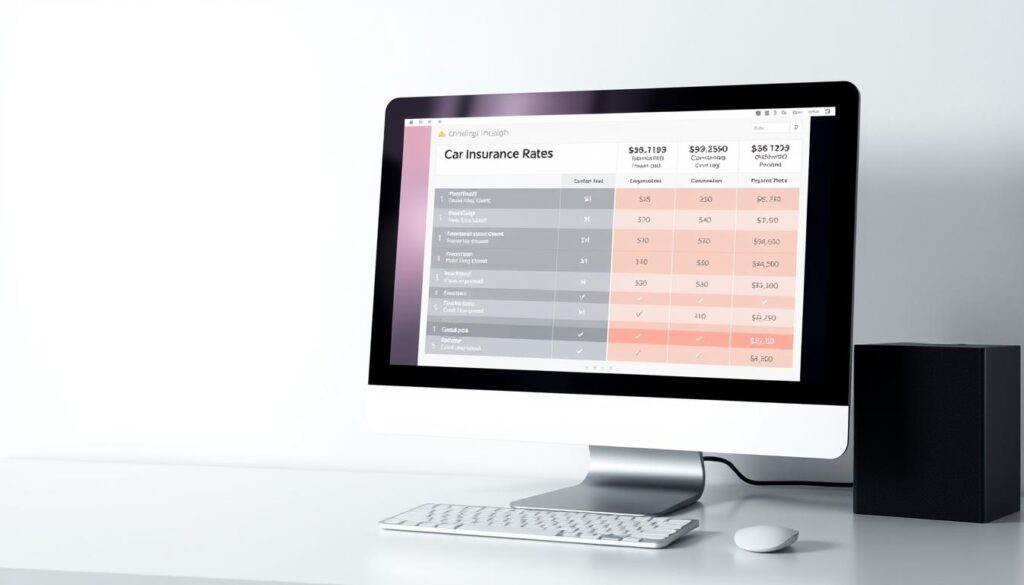
When looking for the best car insurance, comparing rates is key. We need to get quotes and use tools to compare policies. Reading reviews helps us understand the company’s reputation and service.
To compare quotes, we can use online tools or talk to agents. We should look at coverage, costs, and deductibles. This way, we can find a policy that fits our budget and needs.
Some companies promise to match prices, giving us more confidence. We should also check the company’s financial health and customer service. By comparing quotes, we can get the right coverage and feel safe on the road.
Here is a table summarizing the average cost of car insurance in the U.S.:
| Coverage Type | Average Monthly Cost |
|---|---|
| Full Coverage | $223 |
| Minimum Coverage | $72 |
By comparing car insurance quotes and considering these factors, we can find the best car insurance policy for our needs and budget.
Common Discounts Offered by Car Insurance Companies
When looking for the best car insurance, discounts are key. Finding the right auto insurance can be tough. But knowing about discounts can help you choose wisely. Many companies offer cheap quotes to draw in customers. It’s important to look at discounts to save more.
Top car insurance companies offer various discounts. For example, safe driver discounts, multi-policy discounts, and good student discounts. Some insurers give discounts for students with high GPAs or for drivers who take defensive driving courses. These can lower your premium costs, making insurance more affordable.
To get these discounts, compare what different companies offer. USAA gives discounts for bundling home and auto insurance. GEICO offers discounts for safety features like anti-lock brakes. Exploring these options can help you find the best insurance that fits your budget.
Here are some common discounts to look for:
- Safe driver discounts: for drivers with clean records
- Multi-policy discounts: for customers with multiple policies
- Good student discounts: for students with high GPAs
Understanding these discounts can help you find the best insurance. This way, you can enjoy affordable rates.
Understanding Policy Limits and Deductibles
When looking for the best car insurance, knowing about policy limits and deductibles is key. Policy limits are the highest amount an insurance company will pay for a claim. Deductibles are what you pay first before your insurance helps.
For example, if your car gets damaged for $2,000 and you have a $500 deductible, you pay $500. Your insurance covers the rest, $1,500.
To get affordable car insurance, it’s important to look at the top providers and their options. Some offer deductible waivers for extra protection. But, it’s important to think about the costs and benefits.
Car insurance deductibles usually range from $250 to $2,000. Higher deductibles mean lower monthly payments but more out-of-pocket costs if you need to make a claim.
Here are some key points to consider when choosing policy limits and deductibles:
- Higher deductibles can result in lower premiums, but may lead to higher out-of-pocket expenses in the event of a claim.
- Lower deductibles typically result in higher premiums, but may provide more financial protection in the event of a claim.
- Policy limits and deductibles can vary depending on the insurance company and the type of coverage.
Finding the right balance between policy limits and deductibles is key to the best car insurance. By looking at the top providers and their options, you can make a smart choice. This way, you get affordable insurance that fits your needs.
The Role of Credit Scores in Insurance Premiums
When we look at car insurance rates, credit scores play a big role. A bad credit score can make car insurance much more expensive. In some places, rates can go up by over 100%.
In Washington, D.C., for example, a poor credit score can raise rates by 165% on average. This shows how important credit scores are when choosing car insurance.
To find the best car insurance, knowing how credit scores affect rates is key. Insurance companies see credit scores as a way to guess if you might file a claim. A good credit score can mean lower premiums, while a bad one can mean higher rates.
Car insurance reviews often mention that some companies offer better rates to those with excellent credit. This highlights the need to keep your credit score in check.
Here is a table summarizing the average annual auto insurance premiums by credit tier:
| Credit Tier | Average Annual Premium |
|---|---|
| Poor | $4,644 |
| Average | $2,883 |
| Good | $2,638 |
| Excellent | $2,257 |
By comparing car insurance rates and understanding the impact of credit scores, we can make informed decisions when selecting the best car insurance coverage for our needs.
Claims Process: What to Expect

Understanding the claims process is key when choosing the best car insurance. Knowing how companies handle claims is important. The process can be complex, but we’ll help you through it.
An insurance adjuster will reach out to you within 1 to 3 days after you file a claim. You can file a claim through a mobile app, as about 70% of companies offer this option.
To get affordable car insurance, knowing the claims process is vital. After filing a claim, you’ll have to pay a deductible. This can be between $250 and $1,000, depending on your policy. Repair estimates usually take 2 to 5 days. Some states have “no-fault” laws, which can change the claims process.
Here are some important points to keep in mind during the claims process:
- Average time taken for claims to be settled: 30 to 45 days
- Percentage of claims that are disputed by insurers due to questions of liability: Approximately 30%
- Rental Reimbursement coverage: $30 to $100 per day, depending on the policy
Understanding the claims process helps you choose the best auto insurance. By considering these factors, you can make a smart choice. Always check your claim status online or through a mobile app. Also, use Rental Reimbursement coverage if your car is not drivable after an accident.
| Claim Type | Average Time to Settle | Average Cost |
|---|---|---|
| Minor Accident | 15 days | $1,500 |
| Major Accident | 30 days | $5,000 |
The Future of Car Insurance: Trends to Watch
The car insurance industry is changing fast. Two big trends are usage-based insurance and the rise of self-driving cars.
Usage-Based Insurance Models
Insurers are now using UBI programs. These programs give rates based on how you drive. They use telematics to track your driving habits.
This approach makes insurance more personal. It also makes customers happier and more likely to stay with their insurer.
The Impact of Autonomous Vehicles
Self-driving cars will change insurance a lot. They might make fewer accidents, which means fewer claims. This could lower insurance costs.
AI will also make handling claims faster. By 2025, half of these tasks could be automated.
Technology in Claims Processing
New tech is making claims faster. Insurers say they can process claims 20% quicker now. They’re also working on better communication with customers.
As the industry grows, insurers need to keep up. They must adapt to new trends to offer the best service. This will lead to a more efficient and tech-savvy insurance world.