

As of February 2023, the average life expectancy in the U.S. is about 76.4 years. This shows why lifetime coverage is key in life insurance. Whole life insurance offers a guaranteed death benefit and a cash value that can be used while you’re alive. It’s a stable and secure option for our families.
Whole life insurance covers you for your entire life if you keep paying premiums. It’s great for those wanting lifelong protection. The cash value can help with retirement or debt, making it a smart part of our financial plans.
Key Takeaways
- Whole life insurance provides lifelong coverage with a guaranteed death benefit.
- A whole life policy accumulates cash value over time, which can be used during the policyholder’s lifetime.
- Whole life insurance premiums are generally higher compared to term life insurance premiums.
- Approximately 70% of American families do not have adequate life insurance coverage to protect their financial future.
- Whole life insurance can be a valuable component of our financial planning strategy, providing stability and security for our families.
- It’s essential to consider life expectancy when choosing a life insurance policy, such as a whole life insurance policy or a lifetime coverage policy.
- Whole life insurance policies may offer favorable tax treatment under Section 101(g) of the Internal Revenue Code.
Understanding Whole Life Insurance
Whole life insurance is a type of permanent life insurance. It has a guaranteed death benefit and a cash value part. It covers you for your whole life, making it a top pick for lifelong protection.
This insurance helps ensure your loved ones are set financially after you’re gone. The cash value part earns interest, growing tax-free over time. Policy dividends can also add to the cash value, giving you a chance to earn more than you paid in premiums.
Key Features of Whole Life Policies
Whole life policies have level premiums, a guaranteed death benefit, and the chance for dividend payments. You can use the cash value for loans or withdrawals. But, this might lower the death benefit or use it up.
Whole life insurance is pricier than term life for the same coverage. This is because it offers lifelong coverage and grows in value over time.
Here are some key benefits of whole life insurance:
- Guaranteed death benefit
- Cash value accumulation
- Level premiums
- Potential for dividend payments
- Access to cash value through loans or withdrawals
There are different types of whole life insurance, like Level Payment and Single Premium. Participating policies give dividends to the insured, but these are not guaranteed. Whole life insurance grows in value, providing a fund for the insured.
Benefits of Whole Life Insurance

Whole life insurance offers many benefits. It provides lifelong coverage and a guaranteed cash value. This means your loved ones will get a death benefit, no matter when you pass away.
It also grows a cash value at 2% to 6% interest each year. You can use this cash value during your lifetime. It’s great for unexpected bills or to help with retirement.
Some policies may give policy dividends. These can increase your policy’s value. But remember, dividend payouts aren’t guaranteed. They depend on the insurance company’s success.
The main benefits of whole life insurance are:
- Lifelong coverage
- Guaranteed cash value accumulation
- Potential policy dividends
- Tax-deferred growth of cash value
- Income tax-free death benefit
Whole life insurance gives you financial security and peace of mind. It’s good for you and your family.
How to Choose the Right Whole Life Policy
Choosing the right whole life policy is key. We need to look at our coverage needs and compare providers. Guardian says this helps us find the best policy for us. We should think about premium payments and policy riders to make a good choice.
A whole life policy covers us for life, unlike term life which has a set time. Insurance policies can have riders like accelerated death benefits. These allow for early payout under certain conditions. It’s important to understand these riders and how they affect the policy’s benefits and costs.
When picking a whole life policy, consider these important factors:
- Coverage rates and policy benefits, which can vary by state and policy
- Premium payments and how they might change over time
- Policy riders and their impact on benefits and premiums
By carefully looking at these factors and our personal needs, we can pick the right whole life policy. This ensures lifelong protection for our loved ones.
| Policy Type | Coverage Limit | Premium Payments |
|---|---|---|
| Whole Life | Lifelong | Level premiums |
| Term Life | Specified period | Increasing premiums |
The Costs Associated with Whole Life Insurance
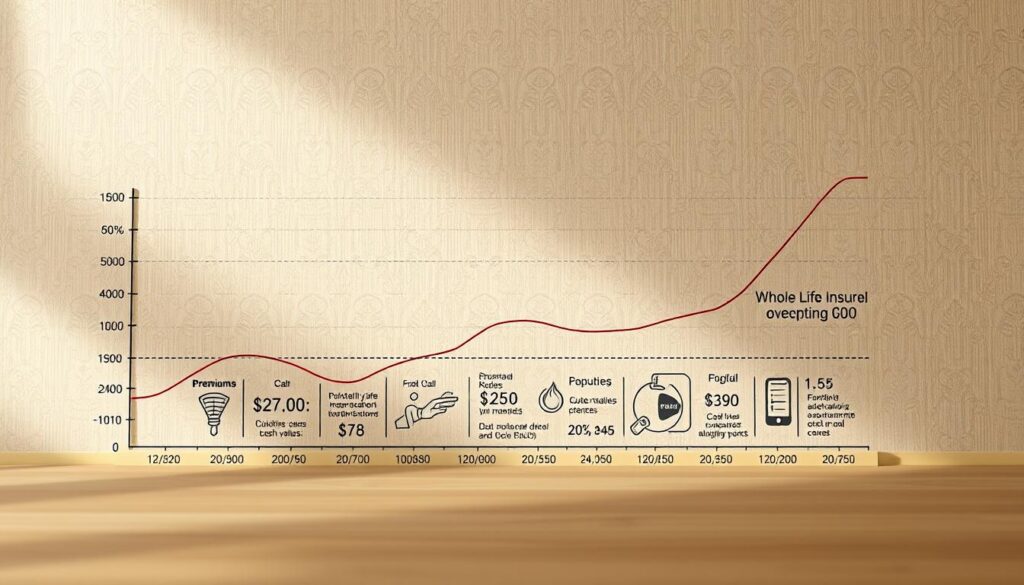
Understanding the costs of whole life insurance is key. Premium payments are a big part, as they can stay the same or go up. Aflac says these payments are a main cost. On average, people pay $300 to $1,400 a year, based on their age and health.
The guaranteed cash value and policy dividends also matter. These parts of whole life insurance grow at a rate of 3% to 5% yearly. This growth depends on the company and the market. Age, health, and gender also affect the cost, with women often living longer than men.
It’s important to know how these factors impact premium payments. The cost goes up about 8% for men and 7% for women with each year of age. About 60% of policies are bought for their cash value growth. This shows how key the guaranteed cash value and policy dividends are in the cost.
Common Misconceptions About Whole Life Insurance
Many people think whole life insurance is too pricey or just for the rich. But, it’s not always true. Whole life insurance can be a smart choice for anyone, not just the wealthy. It offers a death benefit and a cash value that can help financially.
Here are some important things to think about with whole life insurance:
- It covers you for life if you keep paying premiums.
- The cash value grows over time, usually at 3% to 5% a year.
- It can help with retirement or final expenses.
Guardian points out some common wrong ideas about whole life insurance. One big one is thinking it’s too pricey. But, people often guess the cost way too high. For example, term life insurance for a healthy 30-year-old is about $170 a year. Whole life insurance costs more, but it also offers a death benefit and a growing cash value.
Whole life insurance can secure your financial future for big goals like funeral costs or retirement. It’s key to know both the benefits and costs of whole life insurance. This way, we can get the right coverage for our loved ones and reach our financial dreams.
The Role of Whole Life Insurance in Estate Planning
Whole life insurance is key in estate planning. It ensures our wealth is passed on smoothly and offers tax benefits. The National Center for Health Statistics shows life expectancy is important in planning. Whole life insurance helps us prepare for the future.
A whole life policy gives a tax-free death benefit to our heirs. This can cover estate taxes, funeral costs, and other financial needs. About 60% of Americans see life insurance as a way to leave an inheritance. This shows its big role in estate planning.
- Providing a smooth transfer of wealth to our beneficiaries
- Offering tax benefits to our heirs
- Creating a source of funds for estate taxes and other financial obligations
- Accumulating cash value over time, which can be used to support our legacy
Adding whole life insurance to our estate plan protects our loved ones. It offers lifetime coverage and tax benefits. This makes whole life insurance a valuable tool for securing our legacy and supporting our family’s financial well-being.
Whole Life Insurance vs. Term Life Insurance
Choosing between whole life insurance and term life insurance is a big decision. Whole life insurance covers you for life, often until you’re 90, 100, or 120. It also grows in value over time. Term life insurance, on the other hand, lasts from 10 to 30 years and costs less.
One major difference is the cost. Term life insurance is cheaper. For example, a 20-year term policy for a 40-year-old man costs about $3,340 a year. Whole life insurance, though, can cost up to $7,440 a year for the same person.
Another key point is the cash value. Whole life insurance has a cash value that grows. You might also get dividends. Term life insurance doesn’t have a cash value.
| Policy Type | Coverage Period | Premium Payments | Cash Value Component |
|---|---|---|---|
| Whole Life Insurance | Entire lifetime | Generally higher | Builds in value over time |
| Term Life Insurance | 10-30 years | Generally lower | No cash value |
In summary, whole life insurance and term life insurance have different benefits. Whole life insurance offers lifetime coverage and a growing cash value. Term life insurance is cheaper and flexible. Think carefully about what you need before making a choice.
The Application Process for Whole Life Insurance

Applying for whole life insurance involves several steps. You start with an application that asks about your health and lifestyle. This helps figure out if you qualify and how much you’ll pay each month.
You might also need a medical exam. This checks your health and risk level. Some companies offer quick underwriting without a medical exam.
After you apply, the company reviews it. If they say yes, you get a policy with a set premium and coverage. You can also add riders for extra benefits.
Before you sign, read your policy carefully. Make sure you understand the payments, coverage, and any riders. This ensures your policy meets your needs and protects your loved ones.
Frequently Asked Questions About Whole Life Insurance
Let’s answer some common questions about whole life insurance. The cash value in a whole life policy can be used in several ways. We can take out loans, make withdrawals, or even surrender the policy. This cash value is a valuable resource that can help us financially throughout our lives.
Can we borrow against the policy? Yes, we can. Whole life insurance policies let us borrow against the cash value. The interest rates are usually between 5% and 9%. Borrowing money can be handy, but it’s important to remember it might lower the death benefit for our loved ones.
What if we can’t pay the premiums anymore? If we can’t pay the premiums, the policy might not lapse. Whole life insurance policies often have a feature that uses the cash value to pay premiums. But, this can slowly reduce the death benefit over time. It’s important to think carefully about our options.